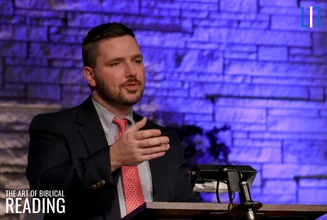
Adam Koontz- The Art of Biblical Reading

Learn to Read the Bible with Clarity and Confidence

Too many Christians today feel unsure about how to read Scripture. Should it be read symbolically or literally? How do we handle confusing passages—or recognize when a passage points to Christ? In The Art of Biblical Reading, Dr. Adam Koontz guides you through a distinctively Lutheran approach to Scripture—one that is faithful, reverent, and confident in the unity of God’s Word.

Through seven thoughtful and engaging sessions, you’ll learn how to read the Bible as the Church always has: as a book inspired by God, centered in Christ, and meant to be understood by His people.


Topics Covered in the Course

  • Why the Bible should be read literally, historically, and theologically—not skeptically.
  • How allegory and typology can deepen (not diminish) faithful interpretation.
  • The connection between Scripture, tradition, and the Church’s reading of the Word.
  • Common mistakes modern readers make—and how to avoid them.
  • How to read difficult or disputed passages without fear or confusion.
  • What it means to confess the unity of Scripture from Genesis to Revelation.
  • The role of the preacher and hearer in preserving the clarity of the text.

If you’re a pastor, teacher, Bible study leader, or simply want to grow in your confidence and joy in Scripture, this course is for you.


Let’s Get Started

This course contains seven sessions, each with a full video lesson, detailed course notes, and a quiz to help solidify what you’ve learned. You’ll also find discussion prompts to encourage deeper reflection and conversation.

Sorry, you need to subscribe in order to view this content.
Lessons in this course

What Is the Bible?

What Is the Bible?

Course Materials This opening session lays the foundation for reading the Bible faithfully. Dr. Koontz addresses what Scripture truly is—God’s own Word—and why its divine authorship shapes how we approach it. He explains the importance of recognizing its authority, the unity between the Old and New Testaments, and the role of faith in receiving the […]

Start Lesson
Why the Bible Changes You

Why the Bible Changes You

Course Materials This session examines the divine power of Scripture. Dr. Koontz explains how the Bible is not a static text but the active Word of God that brings faith, confronts sin, and gives life. Drawing from biblical examples and the church’s experience, he shows that its power lies in God Himself—not in human eloquence […]

Start Lesson
The Clarity of Scripture

The Clarity of Scripture

Course Materials In this session, Dr. Koontz addresses the Bible’s clarity—what theologians call perspicuity. He explains that God speaks in a way that can be understood, while also acknowledging that unbelief and sin can obscure the message. This clarity is both external (in the plain meaning of the words) and internal (illumined by the Holy Spirit), ensuring […]

Start Lesson
The Purpose of Scripture

The Purpose of Scripture

Course Materials This session explores how Scripture interprets itself and how its unified message becomes clear when read in context. Koontz explains why Lutherans emphasize the “one literal sense” of the Bible, contrasts it with medieval multi-layered interpretations, and shows how large-scale reading uncovers connections across the Law, Prophets, and Gospels. Sorry, you need to […]

Start Lesson
How the Bible Fits Together

How the Bible Fits Together

Course Materials This session focuses on the unity of the Bible’s message across its diverse books and authors. Koontz explains how Scripture’s interwoven themes and consistent witness to Christ confirm its divine authorship. By tracing promises, prophecies, and fulfillments, we see how the Old and New Testaments speak with one voice about God’s plan of […]

Start Lesson
How Jesus Interprets the Bible

How Jesus Interprets the Bible

Course Materials This session explores how the Old and New Testaments fit together with Jesus Christ at the center. Koontz begins with a straightforward prophecy from Isaiah 7:14 and then moves to a deeper study of Mark 12, where Jesus debates the Sadducees, a scribe, and the crowd. Through these encounters, we learn the principle […]

Start Lesson
Types, Allegories, and Reading with Depth

Types, Allegories, and Reading with Depth

Course Materials This capstone session explores types and allegories—how Old Testament patterns (types) find their fulfillment (antitypes) in Christ, and how the apostles sometimes use allegory to press a doctrinal point. Dr. Koontz walks through Stephen’s martyrdom (Acts 6–7), Paul’s Adam–Christ typology (Romans 5), and Paul’s Hagar/Sarah allegory (Galatians 3–4), showing how origin “by promise” and faith—not ethnicity or […]

Start Lesson